

Circumstances of Iceland: The Land Forged by Fire and Ice
The Geological Anomaly: Fire Meets Ice
Iceland is not merely an island; it is an active geological phenomenon. Its very existence is a miracle of nature, defined by its location at the intersection of two powerful, contrasting forces: the blistering heat of the Earth’s mantle and the freezing grip of Arctic glaciers. This circumstance—being the only place on Earth where a major tectonic rift is visible above sea level—makes it a truly unique destination.
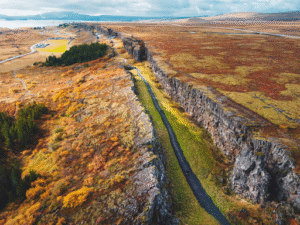
The Mid-Atlantic Ridge: Walking Between Continents
The island sits squarely upon the Mid-Atlantic Ridge, the divergent plate boundary where the North American and Eurasian tectonic plates are slowly pulling apart.
A Divergent Boundary: Unlike boundaries where plates collide (creating mountains like the Himalayas), here they separate, allowing magma to rise and form new crust. This process is literally tearing Iceland apart at a rate of approximately 2cm (0.8in) per year.
Þingvellir National Park: Visitors can stand in the Almannagjá canyon in Þingvellir, a UNESCO World Heritage site, and walk in the rift valley formed by this separation. This location isn’t just geologically fascinating; it is also the original site of the Alþingi, Iceland’s national parliament, established in 930AD, making it a cradle of both geological and democratic history.
Volcanoes and Glaciers: The Dual Identity
The island’s nickname, “The Land of Fire and Ice,” is a literal description of its landscape.
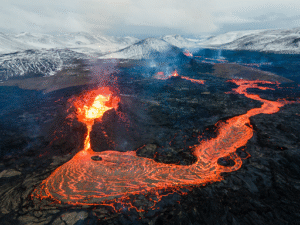
The Fire: The rising magma creates intense geothermal heat, powering countless hot springs, bubbling mud pools, and the famous geysers. Iceland boasts over 30 active volcanic systems, with frequent eruptions shaping the land. The heat is harnessed to power over 90% of Icelandic homes, making the country a global leader in renewable, geothermal energy.
The Ice: Counterbalancing the heat are massive ice caps and glaciers, covering over 10% of the country. The largest is Vatnajökull, a colossal ice cap that sits atop several active volcanoes. This dangerous juxtaposition can cause sudden, devastating glacial floods known as jökulhlaups, where meltwater rushes out from beneath the ice during a subglacial eruption.
The Golden Circle: Iceland’s Greatest Hits
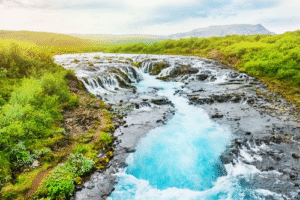
The Golden Circle (Gullni hringurinn) is a 300km (190mi) route stretching from Reykjavík into the southern uplands. It offers a concise, accessible showcase of Iceland’s dramatic natural power. It is the perfect day trip to grasp the scale and variety of the island’s circumstances.
The Big Three
The route is defined by three spectacular main stops, each representing a core Icelandic natural feature:
- Þingvellir National Park (History & Tectonics): As noted, this is where the Eurasian and North American plates meet. Beyond the dramatic rift, this site is revered by Icelanders as the location of the first parliament, giving it a profound cultural and political significance.
- Geysir Geothermal Area (Hydrothermal Power):This area in the Haukadalur valley is a steaming landscape of hot springs and mud pools. It is home to The Great Geysir (the origin of the English word geyser), which is mostly dormant, and the highly active Strokkur, which reliably erupts, shooting scalding water 20m (66ft) into the air every 5 to 10 minutes. It’s a primal, visceral display of the geothermal energy surging beneath the surface.
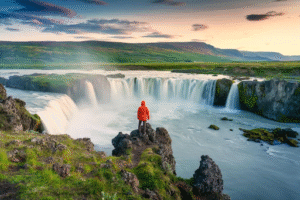
- Gullfoss Waterfall (The Golden Falls):The water of the Hvítá river plunges into a rugged canyon in two stages, dropping a total of 32m (105ft). On a sunny day, the spray catches the light to create multiple rainbows, giving the waterfall its majestic name. It represents the powerful, unharnessed force of Iceland’s glacial rivers.
Notable Detours
Many travelers add the striking Kerið Crater Lake to their Golden Circle tour. This 6,500-year-old volcanic caldera features bright red volcanic rock walls contrasted sharply with a deep, cerulean-blue pool of water at its base—a photographer’s dream and a perfect visual summary of the land’s fiery origins.
The Celestial Phenomenon: Hunting the Aurora
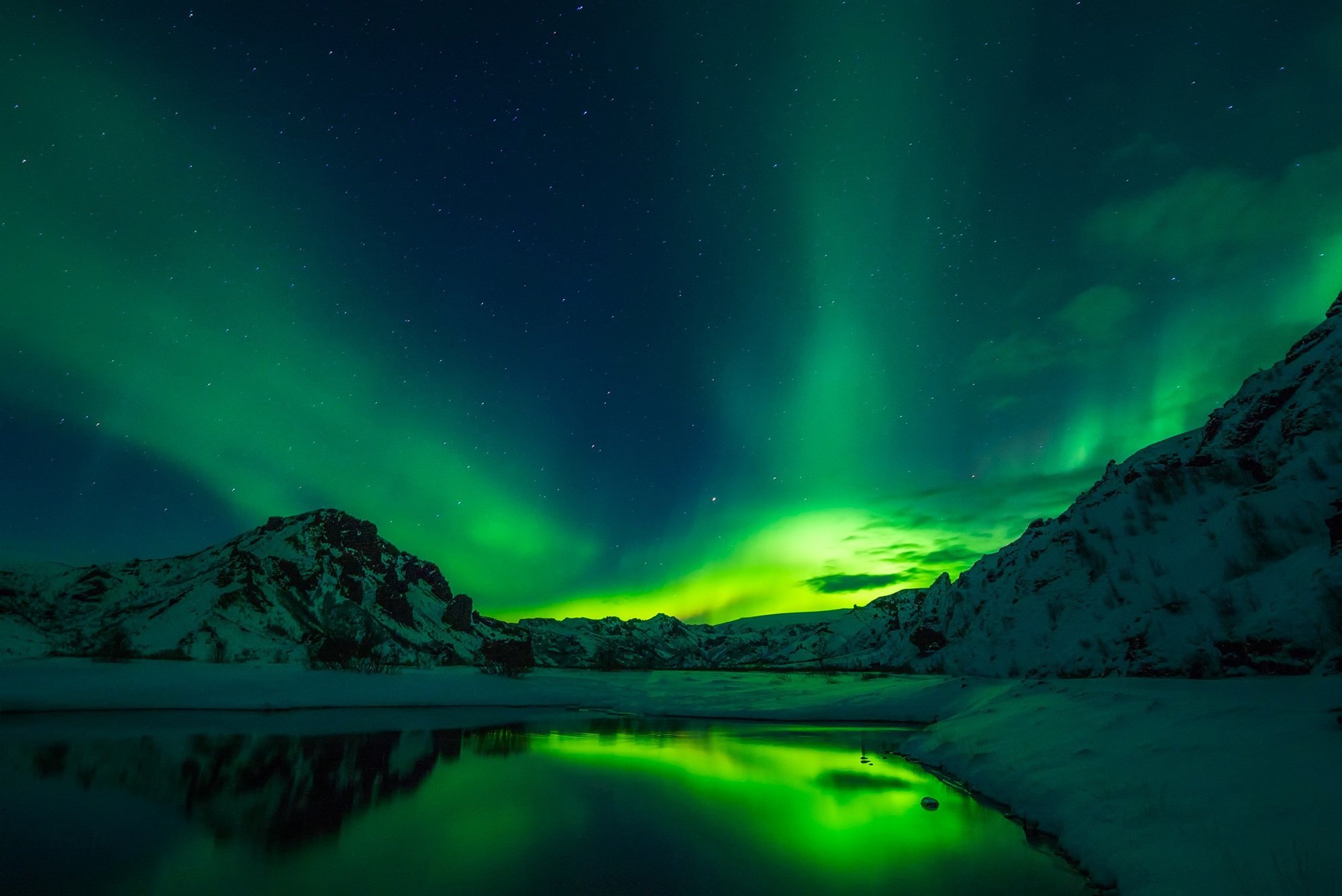
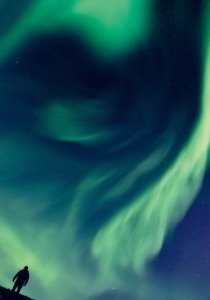
A major circumstance defining the Icelandic experience is its location just south of the Arctic Circle, placing it directly under the Auroral Oval, the region where the Aurora Borealis (Northern Lights) is most visible.
The Science and The Show
The Aurora is a natural light display caused by solar wind (charged particles) striking the Earth’s atmosphere. The interaction releases energy, creating the signature sheets, curtains, and rays of dancing green, pink, and violet light.
- The Viewing Season: The lights can only be seen when the sky is dark. In Iceland, the prime viewing season runs from late August/early September to mid-April. The darkest months, November to January, offer the most viewing hours.
- Optimal Conditions: Viewing depends on three factors:
- Darkness: Absolutely necessary.
- Clear Skies: Clouds will obscure even the strongest display. Checking the Icelandic Meteorological Office’s cloud cover forecast is essential.
- Solar Activity: Measured by the Kp-index (scale 0-9). The higher the number, the brighter the display.
Finding the Best Spo
To maximize your chances, you must escape the light pollution of the city.
- The South Coast: Locations along the South Coast, such as the black sand beach of Reynisfjara or the ice-filled Jökulsárlón Glacier Lagoon, offer stunning foregrounds for long-exposure photography, reflecting the lights off the icebergs.
- The Countryside: Many travelers book “Northern Lights Tours” or drive themselves to remote areas like Þingvellir National Park or the Snæfellsnes Peninsula, where the profound darkness allows even a modest aurora to shine vividly. The sight of the lights swirling over a glacier or a lava field is an unforgettable, humbling experience.
The Icelandic Way of Life: Saga & Serenity
The final circumstance shaping Iceland is its rich, isolated culture, rooted in a history of Viking settlement, hardship, and a profound connection to the landscape
The Heritage of the Sagas
Icelanders’ national identity is inextricably linked to the Icelandic Sagas (Íslendingasögur), a collection of prose narratives written in the 13th and 14th centuries.
- Medieval Masterpieces: These sagas detail events that took place during the “Saga Age” (930AD–1030AD), documenting the feuds, migrations, and heroic acts of the early settlers. They are characterized by a laconic, objective style and a deep focus on honor, destiny, and family lineage.
- A Literary People: This literary tradition is still vibrant today. Iceland has one of the highest numbers of authors, books published, and books read per capita globally. This literary spirit is often traced back to the Sagas, which effectively kept the Old Norse language and national memory alive through centuries of isolation.
The Modern Circumstance: Living with Nature
Icelandic life today is a direct response to its geographic constraints.
- Geothermal Culture: The abundance of hot water feeds a national bathing culture. The famous Blue Lagoon is the most popular example, but local swimming pools (Sundlaugar), warmed by geothermal heat, are the true social hubs of every town. These pools, often featuring several hot tubs (heita potta) at different temperatures, are where Icelanders socialize, discuss politics, and build community, regardless of the weather.
- The Belief in the Unseen: Due to their deep connection to the unpredictable land, a respectful relationship with nature persists. Surveys often suggest a significant portion of the population believes in or refuses to rule out the existence of Huldufólk (Hidden People or elves). This isn’t superstition as much as a cultural reverence for the rugged, unpredictable forces of the land—a circumstance that guides everything from construction projects to conservation efforts.
>> Iceland is a country of constant, beautiful drama. It is a land where you are perpetually reminded that the Earth is alive, and that is its most captivating circumstance.
Explore Alaska:
“The Awakening of the Last Frontier”
MAY 2026
May marks the official start of Alaska’s travel season, offering the best of both worlds—fewer crowds and the awakening of nature in full splendor. It’s the perfect month for discerning travelers seeking pristine beauty, authentic experiences, and a front-row seat to the changing of seasons.
Key Highlights for May Travel in Alaska:
1. Wildlife Watching at Its Best
- Brown bears emerge from hibernation and can be spotted in places like Katmai or Lake Clark National Park.
- Moose calving season—a rare opportunity to see moose with their newborns in areas near Anchorage and Denali.
- Migratory birds return—ideal for bird watching along the Kenai Peninsula or in the Matanuska-Susitna Valley.
2. Denali National Park: Spring Awakens
- Early May offers snow-capped peaks with blooming tundra.
- Limited crowds = more serene and personalized exploration.
- Ideal time for photography and guided hikes, especially with a naturalist.
3. Glacier Exploration & Coastal Cruises
- Take small-ship cruises through Kenai Fjords or Prince William Sound—see tidewater glaciers calving dramatically into the ocean.
- Whale watching season begins—gray whales are migrating, and humpbacks start to appear.
4. Extended Daylight = More Time to Explore
- With up to 18 hours of daylight, there’s more time for epic hikes, flightseeing, and cultural immersion.
- Perfect for adventure photographers or those who don’t want the day to end.
5. Spring Blooms & Local Festivals
- Witness wildflowers like lupines and forget-me-nots carpeting valleys.
- Attend Anchorage Market & Festival or Sitka’s Spring Music Festival—a touch of Alaskan culture and cuisine.