

South Georgia & The Falklands: The Polar Jewels of the South Atlantic
The Call of the Wild South
The South Atlantic islands of South Georgia and the Falklands represent the final frontier of wilderness travel—a realm where wildlife outnumbers humanity a million-fold and history lies frozen in the Antarctic elements. This is not a destination of luxurious resorts or ancient cities, but of raw, untamed nature; a pilgrimage for the serious traveler seeking the planet’s most magnificent spectacles of biodiversity.
Lying in the frigid, turbulent waters of the Southern Ocean, these British Overseas Territories are primarily visited via dedicated expedition cruise, forming the vital prelude or postscript to an Antarctic journey. The islands are biodiversity hotspots, acting as critical breeding grounds for massive populations of seals and seabirds.
The history here is as dramatic as the landscape. For the Falkland Islands (or Malvinas), the narrative is often centered on the 1982 conflict, but its heritage runs deeper through tough, independent sheep-farming communities known as “Falkland Islanders” or “Settlers.”
South Georgia, however, is a saga of legendary exploration and brutal industry. It is the spiritual home of the great explorer, Sir Ernest Shackleton. It was here he launched his ill-fated Endurance expedition and, famously, returned after his heroic open-boat journey to save his crew. It was also the hub of the destructive whaling industry in the early 20th century, a past that is now slowly rusting away, reclaimed by nature. Today, South Georgia is a triumph of conservation, a place where a tragic history has paved the way for a stunning ecological recovery. To visit these islands is to answer a call from the truly wild heart of the South Atlantic.
South Georgia: Kingdom of Giants
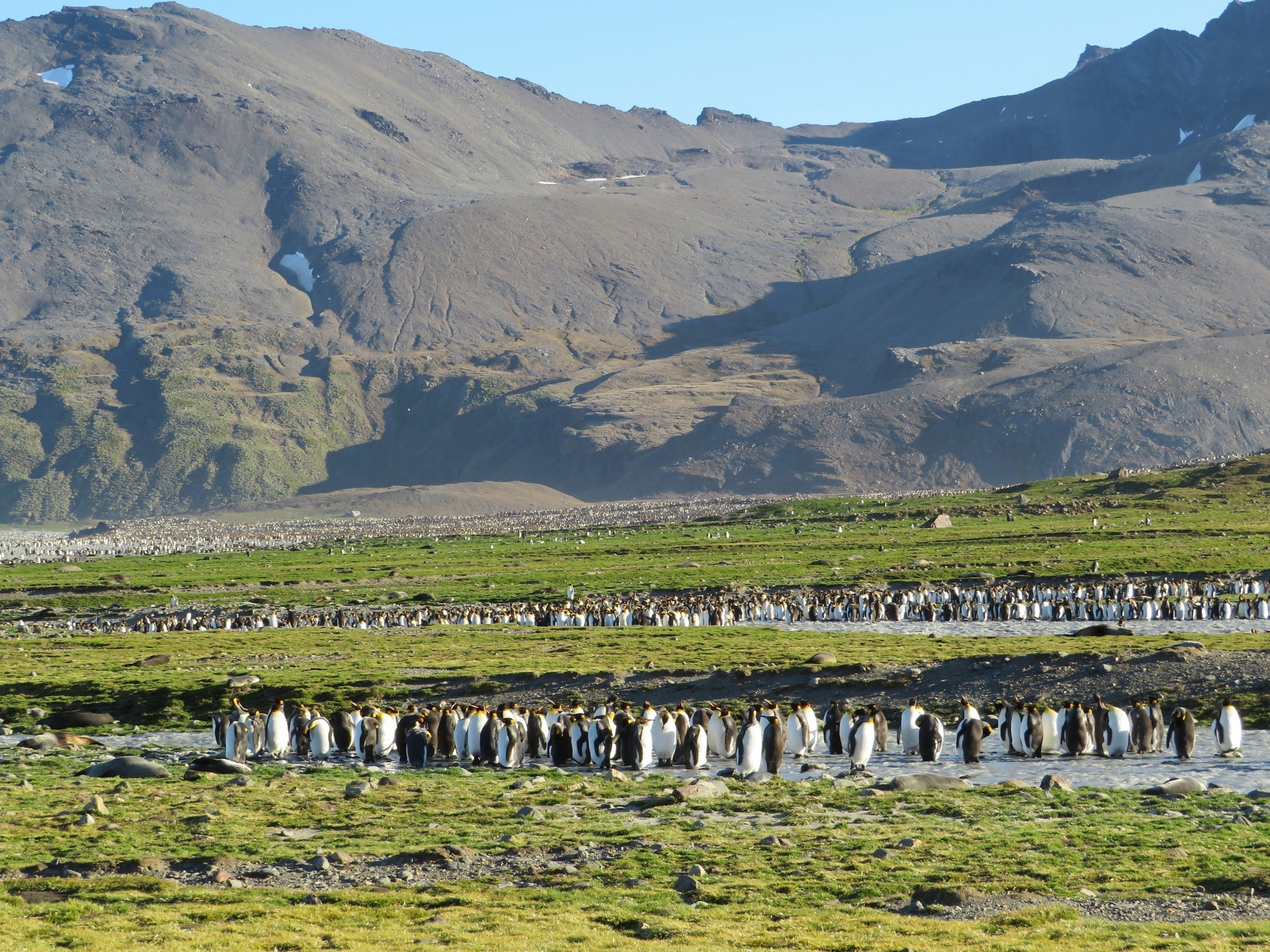
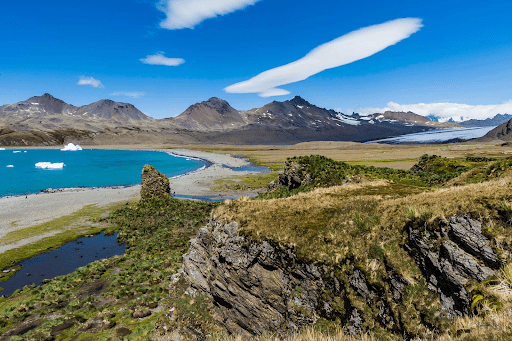
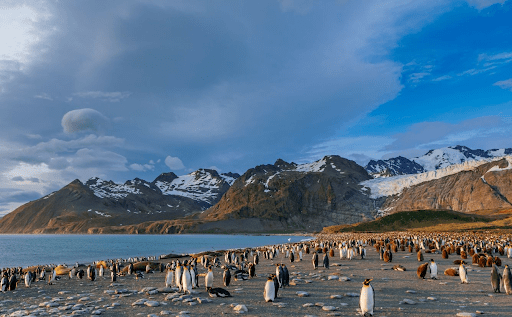
South Georgia is often described as the Serengeti of the Southern Ocean—a bold comparison that finds truth in the sheer density and volume of its wildlife. The spectacle begins the moment an expedition ship approaches a bay like Salisbury Plain or St. Andrews Bay, revealing beaches teeming with life to the very base of towering, glacier-carved mountains.
The island is the undisputed King Penguin capital of the world. Colonies here can swell to hundreds of thousands of birds, creating a sensory overload of sound, movement, and color. Standing at the edge of one of these ‘cities’ of penguins is a humbling experience, observing their organized chaos of courtship, feeding, and chick-rearing.
Alongside the penguins, the beaches are dominated by colossal marine mammals. Southern Elephant Seals, the largest seals on Earth, haul out here in vast numbers for their breeding and molting seasons. Their sheer bulk, coupled with the roaring dominance of the beachmasters, is a powerful display of nature’s scale. They share space with the sleek, numerous Antarctic Fur Seals, whose population has exploded since the end of sealing, often requiring visitors to carefully navigate trails through dense thickets of pups.
A visit to the abandoned whaling station of Grytviken provides a chilling counterpoint to this natural vibrancy. The rusty remnants of the factory, a silent testament to its dark past, is also where visitors can pay their respects at the grave of Sir Ernest Shackleton, who is buried alongside his final resting place among the men he considered brothers. The area now serves as a museum and a small scientific station, symbolizing the island’s shift from exploitation to protection. South Georgia offers the traveler some of the most profound and concentrated wildlife experiences on the planet.
The Falklands: A Land of Contrasts
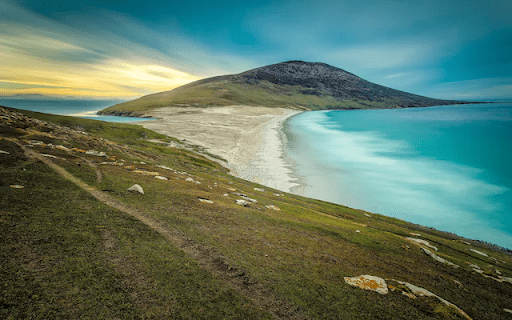
The Falkland Islands, comprised of East and West Falkland and over 700 smaller islands, offer a more pastoral, though equally rugged, experience. They serve as a crucial transitional zone between the warmer waters of the continent and the deep Antarctic.
The capital, Stanley, is a small, colorful settlement with a distinct British character, featuring red telephone boxes, pubs, and historic churches, yet framed by a stark South Atlantic coastline. Beyond Stanley, the “Camp” (the local term for the countryside) is where the true Falklands identity lies: a landscape of sweeping grassland, dramatic cliffs, and peat bogs.
The islands are a premier destination for seabird and penguin viewing. Five different penguin species breed here, including the charismatic Rockhopper Penguins, known for their bright yellow crests and impressive ability to hop up steep, rocky cliffs, and the stately, quiet Gentoo Penguins. The Falklands are also home to major colonies of Black-browed Albatrosses, majestic birds with wingspans up to seven feet, which are a breathtaking sight in flight and at their cliff-edge nesting sites.
The historical tapestry of the Falklands is complex. Sites related to the 1982 war, such as battlefields, monuments, and cemeteries, remain powerful places for reflection. Additionally, the islands’ many beaches often feature the unsettling sight of old, often beautiful, shipwrecks—a reminder of the unforgiving nature of the Southern Ocean. The Falklands offer a blend of history, unique island culture, and approachable, diverse wildlife viewing that sets it apart from the purely epic scale of South Georgia.
Navigating the Remote Atlantic
To reach the polar jewels of South Georgia and the Falklands is an expedition in itself, a journey reserved for those willing to embrace the unpredictable nature of the Southern Ocean.
The primary method of access is via expedition cruise ships—purpose-built vessels capable of navigating rough seas and carrying small zodiac boats for shore landings. These voyages typically begin in South America (often Ushuaia, Argentina) and involve crossing the notoriously choppy Drake Passage before reaching the islands.
The best time to visit is during the Austral Summer (November to March), with each month offering a different focus:
- November: Dramatic landscapes, heavy ice, and courting seals.
- December/January: Peak breeding season for penguins and seals; the most wildlife-dense period.
- February/March: Ideal for whale sightings and the beginning of the seal molt.
A key factor in visiting these protected islands is conservation and biosecurity. South Georgia, in particular, has achieved a monumental conservation victory, eradicating invasive rodents to protect its native bird species. Visitors are required to follow extremely strict biosecurity protocols, including vacuuming all outdoor gear to prevent the accidental introduction of foreign seeds or organisms.
The weather is famously fickle, requiring flexibility and preparation for all conditions. However, the sheer reward of standing on a black sand beach, surrounded by hundreds of thousands of King Penguins, or tracing the final steps of Shackleton, far outweighs the practical challenges. A trip to South Georgia and the Falklands is not just a vacation; it is an unforgettable immersion in a world preserved for the wild.
Explore Alaska:
“The Awakening of the Last Frontier”
MAY 2026
May marks the official start of Alaska’s travel season, offering the best of both worlds—fewer crowds and the awakening of nature in full splendor. It’s the perfect month for discerning travelers seeking pristine beauty, authentic experiences, and a front-row seat to the changing of seasons.
Key Highlights for May Travel in Alaska:
1. Wildlife Watching at Its Best
- Brown bears emerge from hibernation and can be spotted in places like Katmai or Lake Clark National Park.
- Moose calving season—a rare opportunity to see moose with their newborns in areas near Anchorage and Denali.
- Migratory birds return—ideal for bird watching along the Kenai Peninsula or in the Matanuska-Susitna Valley.
2. Denali National Park: Spring Awakens
- Early May offers snow-capped peaks with blooming tundra.
- Limited crowds = more serene and personalized exploration.
- Ideal time for photography and guided hikes, especially with a naturalist.
3. Glacier Exploration & Coastal Cruises
- Take small-ship cruises through Kenai Fjords or Prince William Sound—see tidewater glaciers calving dramatically into the ocean.
- Whale watching season begins—gray whales are migrating, and humpbacks start to appear.
4. Extended Daylight = More Time to Explore
- With up to 18 hours of daylight, there’s more time for epic hikes, flightseeing, and cultural immersion.
- Perfect for adventure photographers or those who don’t want the day to end.
5. Spring Blooms & Local Festivals
- Witness wildflowers like lupines and forget-me-nots carpeting valleys.
- Attend Anchorage Market & Festival or Sitka’s Spring Music Festival—a touch of Alaskan culture and cuisine.